free radicals

redox status

It is possible to obtain 3D map of redox status in a fast and non-invasive way?

It is possible to obtain 3D map of redox status in a fast and non-invasive way? Antioxidant defence system and stabilized level of reactive oxygen species (ROS) protect organisms against various diseases such as stroke or inflammation. In order to create an effective therapy for such diseases, the in vivo redox status map may be useful. The fact is that EPR imaging, with a suitable external imaging probe, is a great tool for monitoring the balance or imbalance between oxidation and reduction reactions and assessing the redox state of the brain. That issue was considered by Hirotada Fujii and his research group in the paper “Mapping of Redox Status in a Brain-Disease Mouse Model by Three-Dimensional EPR Imaging”. Control mice and transient middle cerebral artery occlusion (MCAO) mice were used as the subjects in this experiment. The in vivo redox state in the brains of control and MCAO mice was measured by improved EPR imager that enabled rapid data acquisition, engineered by Fuji and colleagues. Reduction of the acquisition time has allowed to obtain high-quality 3D images in a very short time. A nitroxide, 3-hydroxymethyl-2,2,5,5-tetramethylpyrrolidine-1-oxy (HMP), was used as a redox-sensitive spin probe. HMP has passed freely through the brain-blood barrier, which was also confirmed by MRI examination.  The redox status of MCAO mice was visualized as 3D maps, where each voxel represents   half-live of HMP in the difference part of brain. The half-life mapping of HMP has shown a significant heterogeneity of the redox state in brain of MCAO mice. It was also revealed that there is an increase of HMP in the brain of ischemia-reperfusion-treated mice, and consequently, the reduction rate of nitroxide is slower in MCAO mice. This study confirmed that with the use of an EPR scanner and given an appropriate time of data acquisition, is it possible to provide a 3D map of the in vivo redox state in the mouse brain . Therefore, the role of EPR imaging systems in the research on redox status is significant. References: Fujii H, Sato-Akaba H, Kawanishi K, Hirata H.; Mapping of redox status in a brain-disease mouse model by three-dimensional EPR imaging; Magn Reson Med. 2011 Jan;65(1):295-303; DOI: 10.1002/mrm.22598.

It is possible to obtain 3D map of redox status in a fast and non-invasive way? Dowiedz się więcej »

antioxidans in vegetables

5 servings of fruit and vegetables – why are they so important?

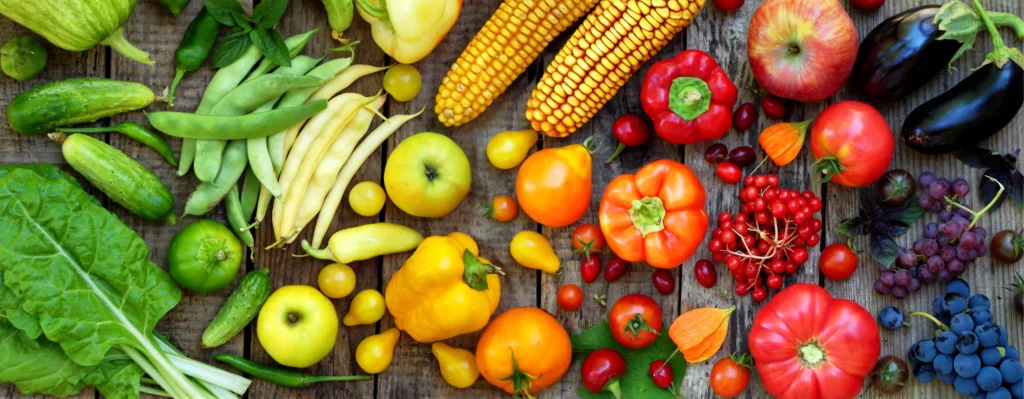
5 servings of fruit and vegetables – why are they so important? “You should have at least 5 portions of fruit and vegetables every day” Sounds familiar? I bet you said yes. Doctors and nutritionists around the world constantly remind us of the importance of eating greens. See what we discovered and see why. Fruit and vegetables apart from all the beneficial vitamins and nutrients are important sources of antioxidants. Antioxidants slow down the ageing process and protect against the harmful effect of free radicals. It is best to eat raw fruit and vegetables and juice may be the perfect option on a busy day. We decided to conduct a simple experiment in which we compared peach and carrot juice. We wanted to see how they handle free radicals scavenging. We filled 0.5 ml Eppendorf with 150 ml of carrot juice and 150 ml of 1 mM nitroxide spin probe. The EPR signal from the sample was measured for 15 minutes using the Novilet L-band system. Then an analogous experiment was carried out with peach juice. After 15 minutes of the experiment, the signal from the carrot juice decreased exponentially by nearly 80%, while in the case of peach juice, the signal decay was linear and only decreased by about 20% So what did we conclude? The results showed that carrot juice was significantly more efficient at scavenging free radicals compared to peach juice. Quote to remember! The more juices you drink, the fewer free radicals you have! Cheers!

5 servings of fruit and vegetables – why are they so important? Dowiedz się więcej »

antioxidants

Why you shouldn’t forget about your coffee?

Why you shouldn’t forget about your coffee, but drink it as fast as you can? Coffee is one of the most popular hot beverages consumed every day all over the world. For some people drinking coffee is like a ritual, for some, it is a way of boosting the energy throughout the day and for others, it is a perfect choice during the first date. It is not surprising because who doesn’t like the scent of freshly brewed coffee in the morning? The debate on the impact of coffee on the human organism is going on for a while now. In an appropriate dose, coffee can be considered a beneficial source of antioxidants. We decided that, since we work so much with free radicals we could show you the information we learned after we looked more closely inside our cups. How many times did you make yourself a coffee at work or at home and then forget about it? We wanted to see if the antioxidant properties of coffee change after some time, and when it is the best time to drink it. We performed a simple experiment with our L-Band spectrometer. Easy access to the measured area, as well as straight-froward sample preparation, let us do the experiment during… well… a coffee break (who would expect that, right? ?). We compared the antioxidant capacity of the freshly brewed coffee with the coffee 1 hour after brewing. It appears that freshly brewed coffee has about 30% better antioxidant properties than the beverage that was tested later. We can’t wait to see other results. We think that comparing different types of coffee would be very interesting, to see how the brewing temperature can affect the antioxidant properties, how the antioxidant capacity impacts the taste. If you would be interested in carrying out those types of experiments let us know and we will discover the secrets of coffee together! Cheers! ☕☕☕

Why you shouldn’t forget about your coffee? Dowiedz się więcej »

Przewijanie do góry